The WFP Innovation Accelerator’s 2025 Year in Review highlights the progress we have made together in advancing innovation across WFP and the wider humanitarian ecosystem.
Annual Country Reports (ACR) are a key accountability document produced by country offices on a yearly basis which inform donors how their funds were used during the reporting year. Their purpose is to tell WFP’s performance story in an accurate, transparent and evidence-based manner by assessing the effectiveness, efficiency and economy of our operations in our pursuit towards zero hunger.
This report presents updated findings from WFP’s Return on Investment (ROI) for Preparedness study, demonstrating the value of pre-shock investments in strengthening emergency response. In a context of increasingly complex, protracted and resource-constrained crises, preparedness is identified as a critical driver of faster, more efficient, and more effective humanitarian action.
This report presents WFP's continued scale‑up and consolidation of Anticipatory Action (AA) in 2025, protecting more than 6.3 million people across 47 countries.
As weather-related shocks become increasingly frequent and severe worldwide, the World Food Programme (WFP) has significantly expanded
its investment in Anticipatory Action (AA) to help countries proactively manage their impact.
This market monitoring update bulletin presents the latest data on food prices and market functionality across the ten provinces participating in the Home-Grown School Feeding Programme, supporting a fair and competitive bidding process for food suppliers and informing price trends relevant to programme implementation.
This policy note builds on the practical and operational experience of the World Bank and World Food Programme (WFP) to offer an overview of why and how strengthening the linkages between disaster risk finance (DRF) and adaptive social protection (ASP) matters.
This decentralized evaluation was commissioned by the WFP Cambodia and covers the mid-term evaluation of the World Food Programme (WFP) McGovern-Dole International Food for Education and Child Nutrition project in Cambodia from 2022 to 2027. It was carried out in 2025.
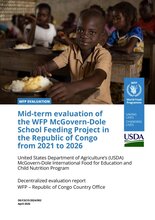
This decentralized evaluation was commissioned by the WFP Republic of Congo Country Office and covers the United States Department of Agriculture's (USDA) Foreign Agricultural Services (FAS) funded five-year school feeding project under the McGovern-Dole Food for Education Program covering the period 2021–2026.
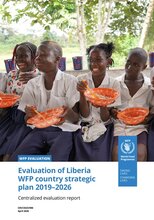
The evaluation of the WFP Country Strategic Plan (CSP) for Liberia for 2019–2026 was conducted between August 2024 and April 2025, to inform the design of the next country strategic plan. The evaluation assessed WFP’s strategic positioning, its contribution to strategic outcomes, the sustainability of the results achieved, its efficiency in implementation and the factors explaining its performance.
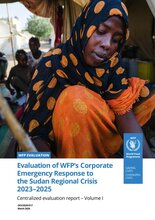
The evaluation of WFP's corporate emergency response to the Sudan regional crisis covers WFP’s strategy and operations related to the crisis between April 2023 and August 2025 in Sudan, the Central African Republic, Chad, Egypt, Ethiopia, Libya, South Sudan and Uganda. The evaluation aimed to strengthen accountability and generate lessons to improve the ongoing response and inform future responses to complex emergencies.
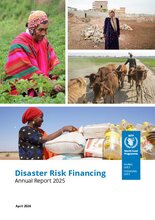
The 2025 Disaster Risk Financing (DRF) Annual Report highlights key insights and achievements from WFP-supported DRF programmes. It provides deep dives into the DRF programmes in each country, as well as stories from the field, interviews with partners and insights into how WFP promotes the use of pre-arranged financing to help vulnerable populations prepare for, respond to and recover from weather-related disasters.
Mr. Ally-Raza Qureshi is WFP's Chief Financial Officer ad interim. A national of Pakistan, Mr. Qureshi brings to this role more than twenty‑three years of distinguished service with WFP, supported by a professional background spanning the humanitarian, development, and private sectors. He began his career as a Chartered Accountant with PricewaterhouseCoopers before transitioning to international humanitarian work in 2001.
These terms of reference are for the decentralized final evaluation of the Green Climate Fund (GCF) project ‘Integrated Climate Risk Management for Food Security and Livelihoods in Zimbabwe’ focusing on Masvingo and Rushinga districts.
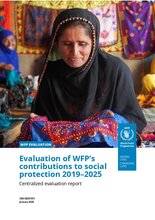
This evaluation was conducted to support institutional learning on WFP’s efforts to strengthen national social protection systems and programmes, as well as its broader engagement in the social protection sector. It was conducted in 2025 in the context of the start of a new WFP strategic plan cycle (2026–2029) and the significant changes in the organization’s operating and partnership landscape, which require WFP to identify and focus on areas with the greatest potential for results.